
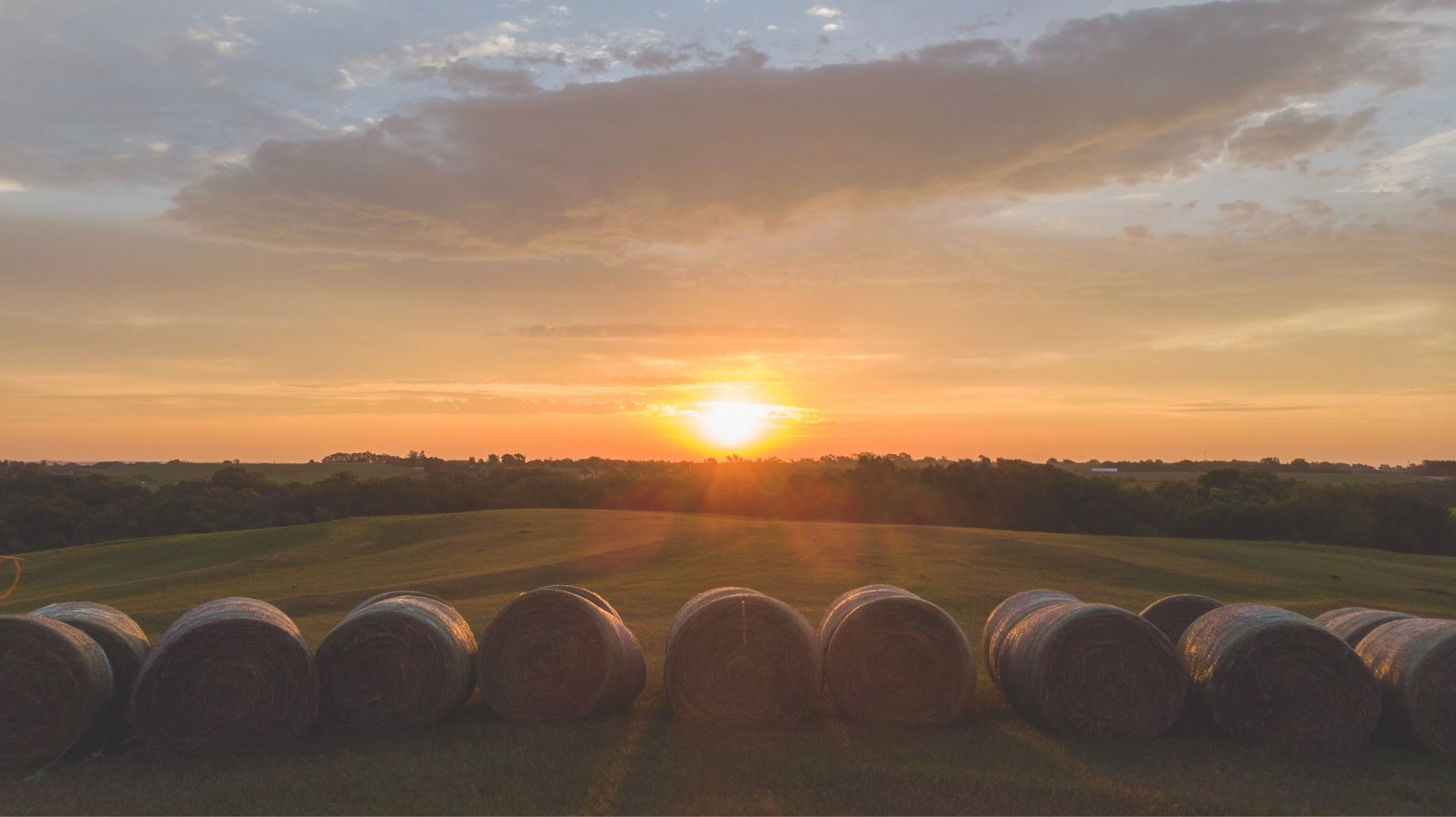
It was a life of constant work. Life on the farm was not one of ease. There were cows to milk, animals to feed, and crops to tend. They planted, grew, and harvested the food for the animals on that farm.
It started in early spring. The ground needed plowing, which was accomplished by standing on a plow behind a team of horses. After the plowing, they would disk it. After that, they had to start planting. They planted the corn by hand. Ten acres. They also put out an acre of oats for the horses.
And once the corn started growing, the ground had to be weeded.
The hay needed mowing. In the morning, he would mow a half acre. In the afternoon, he would rake it and put it in windrows. After supper, they would do their regular chores, then shock the hay.
The next morning, they loaded it on the wagon and brought it to the barn to stack. Later, in the fall, someone would bring in a stationary bailer to the farm, and they would take the hay from the stack and bail it, then put it in the barn.
They would take the cow manure from the barn and put it in a pile outside. Then, on most Saturdays, he would haul fifteen to twenty loads of cow chips on the wagon to the corn fields. There was always something to do on the farm.
In early September, they would cut the corn and put it in shock. In late September, they would take it out of shock and shuck it. They would throw the corn on the ground and put the fodder in bundles. They hauled the fodder to a pasture fence line, put it in a windrow, and would feed it to the cows in the winter.
They hauled the corn to the granary. When they went to town, they would take several sacks of corn and pay to have it ground into feed.
One Saturday, his dad told him to harrow the corn. All ten acres of it. But he said, “Once you finish, you can do whatever you want the rest of the day.”
He hitched the harrow to the horse, started early in the morning, and didn’t stop until the job was done. It took him until noon. Then, he had the rest of the day off.
Hearing him tell his story gives a whole new meaning to manual labor.
Farmwork has come a long way from the kind of farming accomplished in the rural pastures of the 1940s Ozarks.
I know I’m a day late with this post, but those are the types of men (and women) for whom Labor Day was invented.
But they probably worked that day, too.
to my grandpa,
– Caleb



 caneymountainblog.com